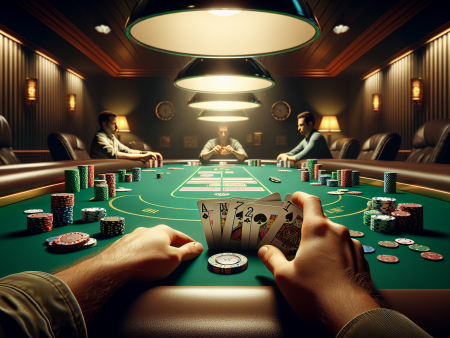
Learn how to spot Angle Shooters in poker and protect your game. Discover techniques and strategies to guard against deceit and play with confidence.
Spotting Angle Shooters: Protect Your Game Now

Understanding the World of Angle Shooters in Poker
Have you ever found yourself on the losing end of a poker game, scratching your head, wondering what just happened? It’s possible you were outplayed, sure. But there’s also a chance you were the victim of an angle shooter, a tactic that leaves even the most seasoned players feeling bamboozled. For those new to the term, angle shooting involves employing unethical, albeit often technically legal, strategies to gain an advantage over your opponents. It’s a gray area that skirts the line between sharp play and outright cheating.
Angle shooting is widely defined by poker authorities as using unethical or deceptive tactics that may be technically within the rules but violate the spirit of fair play, and is most common in live poker where physical actions (chip movements, verbal declarations, acting out of turn) create ambiguity.
The Thin Line Between Strategy and Deception
At its core, angle shooting is about deception. The objective is to mislead opponents about your intentions or the strength of your hand, making it challenging for them to make informed decisions. Unlike blatant cheating, angle shooting doesn’t break the rules of the game. Instead, it exploits them, bending the norms of fair play without crossing into explicit foul play. This can manifest in several ways, each designed to give the angle shooter an underhanded upper hand.
Common Forms of Angle Shooting
Let’s delve into some typical examples of angle shooting to paint a clearer picture:
- Misdeclaring Hand Strength: Perhaps the most straightforward angle shoot, this involves announcing a stronger or weaker hand than you actually hold, hoping to mislead opponents about your cards.
- Acting Out of Turn: By betting or checking out of turn, an angle shooter can trick an opponent into revealing their intended play, allowing the shooter to adjust their strategy accordingly.
- Manipulating Hole Cards: Some players push their hole cards forward to suggest they’re folding without officially doing so, gauging reactions before making their actual move.
- Verbal Misdirection: Claiming to raise when only calling, or vice versa, creates confusion and can lead opponents to misinterpret the shooter’s hand strength.
Each of these tactics leverages ambiguity in the rules or relies on psychological manipulation to gain an advantage, highlighting the craftiness of skilled angle shooters.
Walking the Tightrope: The Ethics of Angle Shooting
The morality of angle shooting is a hotly debated topic in poker circles. Some argue it’s part of the game’s psychological warfare, while others see it as a breach of sportsmanship that undermines the integrity of poker. Regardless of where you stand, being aware of these tactics is crucial for any poker player, not necessarily to employ them, but to defend against them.
Defending Against Angle Shooters
Protecting yourself against angle shooters boils down to vigilance and a solid understanding of poker’s rules and etiquette. Pay close attention to the behavior of your opponents, and don’t hesitate to call out actions that seem designed to mislead or deceive. Remember, knowledge is your best defense against those looking to exploit the unwritten rules of the game.
Conclusion: The Blurred Lines of Poker Play
Angle shooting illustrates the complex interplay between strategy, psychology, and ethics in poker. While it may offer a shortcut to victory for some, it tarnishes the spirit of fair competition for others. Whether you choose to employ these tactics or not, understanding angle shooting is essential for anyone looking to navigate the competitive waters of poker successfully.