


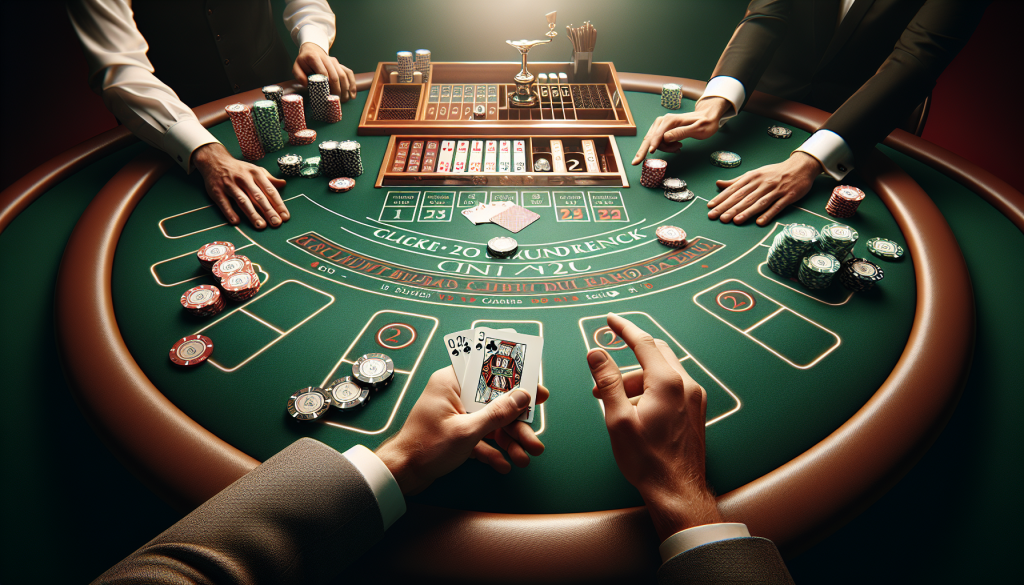
Mastering the Art of Surrender in Blackjack
In the realm of casino games, Blackjack stands as a beacon of strategic depth and excitement. Yet, many players often overlook one of its most nuanced options: the Surrender rule. Understanding when and how to surrender in Blackjack can significantly influence your gameplay, potentially swinging the odds a tad more in your favor.
Early surrender in blackjack allows a player to forfeit half their bet before the dealer checks for blackjack, reducing the house edge by approximately 0.62%, whereas late surrender occurs after the dealer checks and has a much smaller impact on the house edge, typically reducing it by about 0.05 to 0.1 percent.
Decoding the Surrender Option
The concept of surrendering in Blackjack allows a player to fold their hand at the cost of half their wager. This option is available in two forms: Late Surrender and Early Surrender. Late Surrender, the more common variant, permits the player to forfeit half of their bet after the dealer checks for Blackjack. Conversely, Early Surrender, a rarer find due to its player-friendly edge, allows the surrender before the dealer’s check for Blackjack.
Despite its potential benefits, the surrender strategy remains underutilized and misunderstood by many at the table. The decision to surrender should be based on strategic calculations rather than a mere hunch, integrating this tactic into your arsenal only when it aligns with a mathematically sound Blackjack strategy.
When to Wave the White Flag
In the bustling casinos of Las Vegas, where 6-deck shoes and dealers hitting on Soft 17 are the norms, certain situations call for the strategic use of surrender. Here’s a breakdown of when surrendering can tilt the odds slightly in your favor:
- If the dealer shows an Ace, consider surrendering with a Hard 15, 16, or 17, including a pair of 8’s.
- When the dealer’s card is a 10 or face card, surrender with a Hard 15 or 16, but split if you’re holding a pair of 8’s.
- If faced with a dealer’s 9, surrender is advised for a Hard 16, but again, splitting a pair of 8’s is the better route.
These guidelines serve as a beacon, illuminating the path to a more calculated and potentially profitable approach to Blackjack. The rationale behind surrendering in these instances is rooted in the mathematics of the game. In scenarios where the player’s chance of winning dips below a certain threshold, folding half the bet can minimize expected losses over the long haul.
The Psychology Behind Surrendering
Deciding to surrender in Blackjack is not merely a matter of numbers; it’s also a psychological hurdle for many players. The reluctance to “give up” is a natural human instinct, but in the strategic environment of Blackjack, this instinct can sometimes cloud judgment. Recognizing surrender as a legitimate strategy—akin to folding in poker—can be the key to preserving your bankroll and living to fight another hand.
Ultimately, the choice to surrender should not be seen as an admission of defeat but as a savvy decision informed by a deep understanding of Blackjack strategy. It’s a tool in your arsenal, one that requires both the knowledge of when it’s advantageous and the wisdom to use it judiciously.
Embracing the Full Spectrum of Blackjack Strategy
While the surrender rule might add a mere fraction to your overall payback, mastering it—alongside other strategies like splitting pairs, doubling down, and basic hit/stick decisions—can enhance your overall gameplay experience. Blackjack is not just about playing the cards you’re dealt but playing them with an optimal approach. By embracing the full spectrum of strategic options available, including the often-overlooked surrender, you position yourself to not just play, but to play well.
Whether you’re a seasoned Blackjack veteran or a newcomer eager to delve into the intricacies of the game, understanding the surrender option is a step toward a more nuanced and strategic approach to one of the most timeless casino games.